In this article (11 sections)
- The all-in-one bet: what it promises
- Strengths many churches look for
- Weaknesses and honest tradeoffs
- How to evaluate giving as the front door
- Multi-campus and denominational contexts
- Children and student ministry workflows
- Communications: email and texting realities
- Strengths recap
- Weaknesses recap
- A ninety-day evaluation rhythm
- Final summary
Tithe.ly review 2026: giving roots, broader platform ambitions
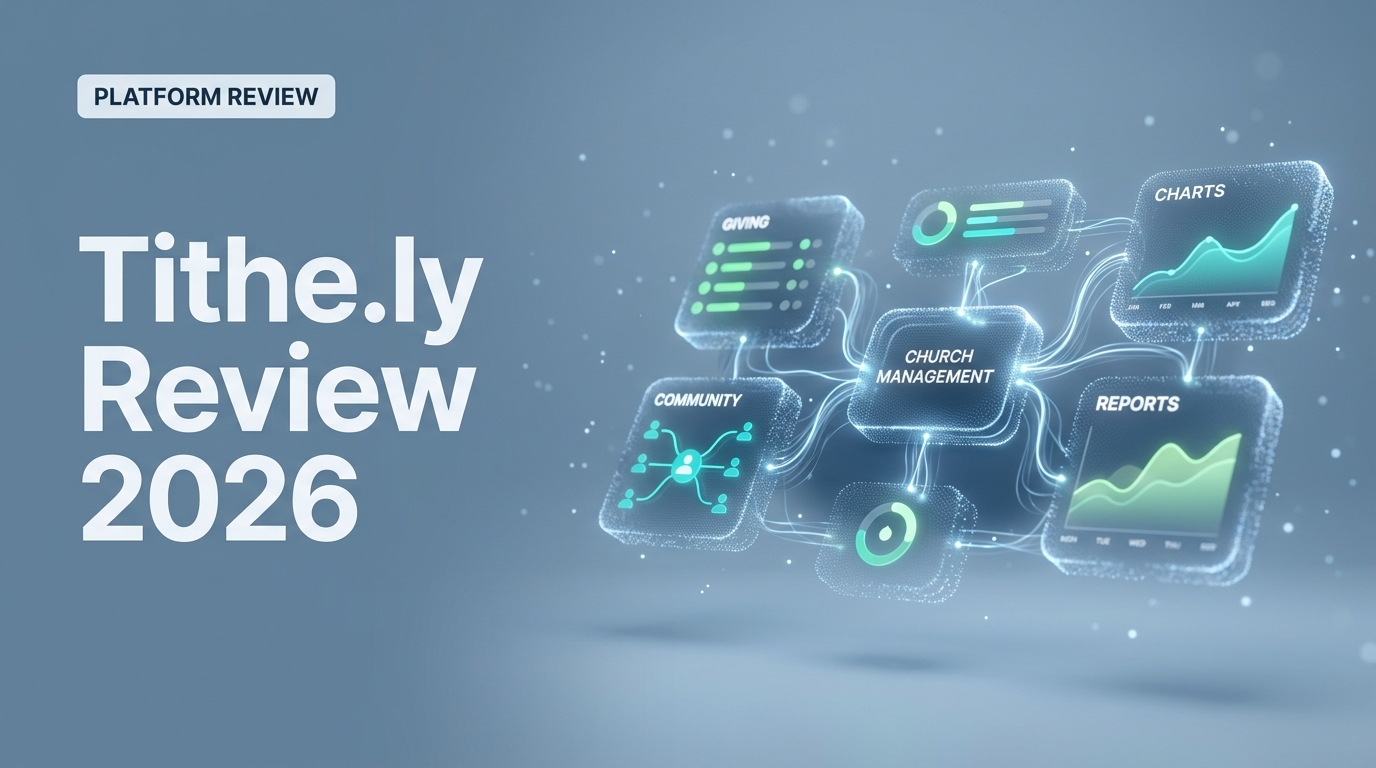
Tithe.ly is widely recognized in church technology conversations because digital giving is a gateway product: it touches nearly every congregation member and creates immediate operational expectations. Based on publicly available information, Tithe.ly describes a portfolio that extends beyond giving into church management, websites, apps, and bundled offerings marketed as an all-in-one approach for churches that want fewer vendors. Packaging names and included components can change, so treat any feature map as provisional until confirmed on official Tithe.ly pages during your evaluation.
chms.org explains how to evaluate bundled church software without treating marketing bundles as automatic wins. We are not affiliated with Tithe.ly.
The all-in-one bet: what it promises
All-in-one bundles typically promise tighter integration, simpler vendor relationships, and a more coherent experience for staff and members. Many churches find that promise attractive when they are tired of duct-taping integrations. The risk is that bundling can also couple decisions: a strength in one area may influence contract scope in another.
Strengths many churches look for
- Familiar entry point through giving: If your congregation already interacts with Tithe.ly for digital gifts, expanding into other modules can feel like a natural step—still validate workflows independently.
- Potentially simpler vendor surface area: Fewer contracts can reduce administrative overhead, though module boundaries still exist in practice.
- Modern expectations: Mobile giving features, recurring gifts, and donor communication are table stakes; confirm current capabilities on official materials.
Bundling can simplify purchasing decisions while increasing the importance of diligent evaluation—because more ministry functions ride on one choice.
Weaknesses and honest tradeoffs
All-in-one stacks can become a single point of dependency. If a module is weaker for your context, you may face awkward compromises or parallel tools anyway. Another weakness is training load: more modules means more staff adoption work, even if integrations are tighter. Another common tension is roadmap prioritization: bundled vendors must serve many segments; your niche workflow may wait.
How to evaluate giving as the front door
Start with donor experience, reconciliation expectations, and finance team workflows. Ask about recurring gifts, refunds, donor self-service, statements, and exports into accounting processes. Confirm details rather than assuming parity with past tools.
<<<2087B>>>Multi-campus and denominational contexts
If you have multiple campuses, test campus segmentation, reporting rollups, and local leader permissions. If you belong to a network, clarify data policies and branding needs.
Children and student ministry workflows
Evaluate check-in speed, guardian matching, allergy handling, and substitute volunteer flows. Peak Sundays reveal truth.
Communications: email and texting realities
Ask about deliverability factors, consent tracking, and how messaging integrates with people data. Many churches need clear unsubscribe and privacy practices.
Strengths recap
- Strong brand recognition in church giving.
- Potential integration advantages within a bundled ecosystem.
- Often aligns with churches seeking fewer separate vendors.
Weaknesses recap
- Bundle dependency can reduce flexibility.
- Adoption complexity rises as more modules go live.
- Not every module will be best-in-class for every church; verify each area.
A ninety-day evaluation rhythm
Weeks 1-3: define outcomes. Weeks 4-6: scripted demos. Weeks 7-10: pilot with one ministry. Weeks 11-12: decision and implementation plan. Many churches move faster and regret it.
Final summary
Tithe.ly is best evaluated as both a giving platform and a potential ecosystem bet. Strengths include integrated packaging and a common entry point through donations. Weaknesses include dependency risk and the need to validate each module independently. Confirm current product packaging and capabilities on official Tithe.ly materials before you standardize your stack.
Tithe.ly is a trademark of Tithe.ly, Inc. chms.org is not affiliated with or endorsed by Tithe.ly, Inc.